
Africa’s health systems depend heavily on women.
Women make up roughly 70% of the global health workforce and are often the primary healthcare decision-makers for families. They are nurses, midwives, caregivers, community health workers, and increasingly, innovators.
Yet when it comes to building companies that solve health problems, women in health innovation remain dramatically underrepresented.
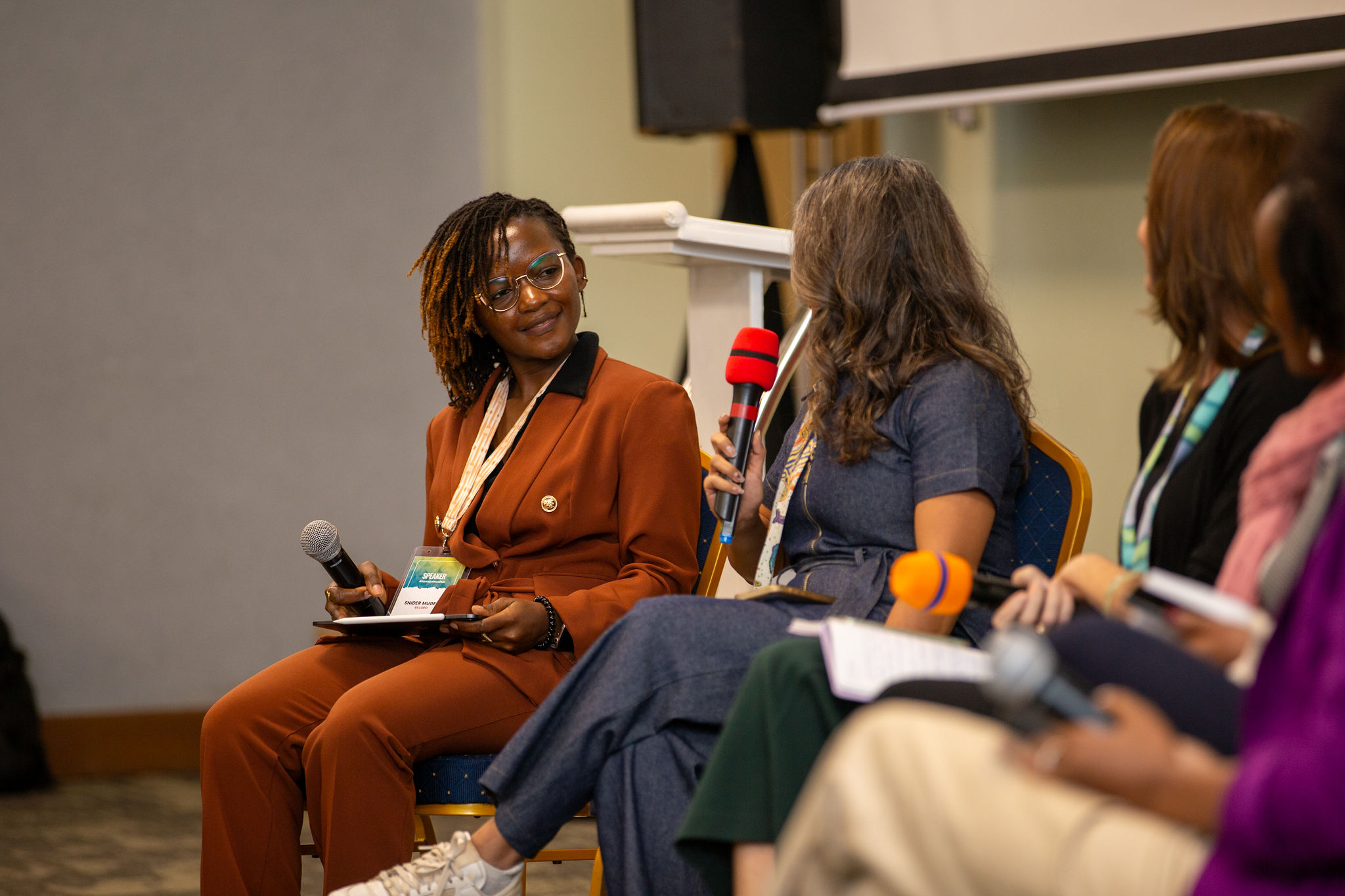
At a recent Villgro x BHS panel on women-led health innovation in Africa, one statistic stopped the room cold: Out of 100 applications to a recent health innovation program, only eight were from women-led startups.
Eight.
Not eight funded. Eight applied.
This isn’t simply a pipeline issue. It is a signal that something deeper in the ecosystem isn’t working.
And until we address that, Africa’s health innovation economy will continue leaving enormous talent—and better health outcomes—on the table.
One of the most striking themes from the panel was how frequently women founders still have to prove they belong in the room.
A female pathologist described the skepticism she regularly encounters because pathology is still perceived as an unusual specialty for a woman. Others spoke about bringing male colleagues into investor meetings simply to make conversations easier.
One participant shared an uncomfortable but revealing experiment: using the name “James” in email correspondence with investors led to faster responses.
The message behind this behavior is clear.
In many investment environments, the default mental model of a “founder” is still male.
That bias is rarely explicit. But it shows up in subtle ways—in who gets the benefit of the doubt, whose expertise is questioned, and whose ideas are immediately taken seriously.
And in entrepreneurship, perception often shapes opportunity.
Another paradox surfaced repeatedly.
Women are often seen as natural caregivers rather than company builders.
Yet healthcare innovation sits exactly at the intersection of care, systems thinking, and operational complexity—areas where women have enormous experience.
The irony is stark.
The same ecosystem that trusts women to run hospitals, deliver babies, and manage community health programs often hesitates to trust them to build scalable companies.
This stereotype shapes everything from investor expectations to founder confidence.
It also contributes to a quieter problem: self-selection out of the innovation pipeline.
If the system signals that you don’t belong, fewer people will try to enter it.
Much attention has been given to the statistic that only about 10% of venture capital globally goes to women-led startups.
But focusing solely on venture capital misses a deeper issue.
Many women-led health innovations are designed differently from the typical venture-backed startup.
They often:
Traditional venture capital—designed for fast-scaling software businesses—often struggles to evaluate these models.
The result is a structural mismatch.
Not necessarily bad ideas.
Not weak founders.
Just capital that isn’t designed for the type of innovation being built.
Patient capital, philanthropic validation funding, and blended finance models are often better suited for these solutions—but those instruments remain limited.
Despite the barriers, the panel highlighted extraordinary examples of women-led solutions already reshaping healthcare delivery.
Among them:
These innovations are not theoretical.
They are already improving care, reaching patients, and strengthening health systems.
Yet many operate with limited capital and minimal visibility.
Imagine what could happen if they didn’t.
One misconception surfaced repeatedly during discussions.
Gender lens investing is often framed as a corrective measure—something designed to help disadvantaged founders.
But that framing misses the point.
Gender lens investing is not about lowering the bar.
It is about expanding the lens of opportunity recognition.
When investment committees lack diversity, when due diligence questions focus more on risk for some founders than growth, and when certain types of innovation are systematically overlooked, capital allocation becomes inefficient.
Diverse perspectives don’t weaken investment decisions.
They improve them.
As one investor on the panel put it:
“Gender lens investing allows us to redesign systems—not to lower the bar, but to widen the lens.”
If the health innovation ecosystem is serious about unlocking women-led innovation, three shifts are necessary.
Women founders are less likely to apply to innovation programs unless outreach is targeted and visible role models exist.
Pipeline does not build itself.
It must be cultivated.
Health startups—especially those serving underserved populations—rarely follow Silicon Valley growth curves.
More patient capital and blended finance structures are needed to bridge the validation gap.
One issue raised repeatedly during breakout discussions was isolation.
Women founders often face the dual pressure of building companies while managing family responsibilities.
Peer networks, mentorship communities, and founder support systems are not “nice to have.”
They are infrastructure.
Perhaps the most powerful message from the session came not from an investor or policymaker, but from a founder.
She said:
“Walk into every room like you are the greatest opportunity.”
That statement captures both the challenge and the possibility of this moment.
Because if Africa is serious about transforming healthcare through innovation, it cannot afford to overlook half of the talent capable of building that future.
The real question is no longer whether women belong in health innovation.
The question is whether the ecosystem is ready to recognize the opportunity standing in front of it.